A Late-Autumn Reading Nook, Built Around Light
A late-autumn reading nook can make the most of fading daylight. Match its seat, lamp, and reading material to the light your room actually gets.
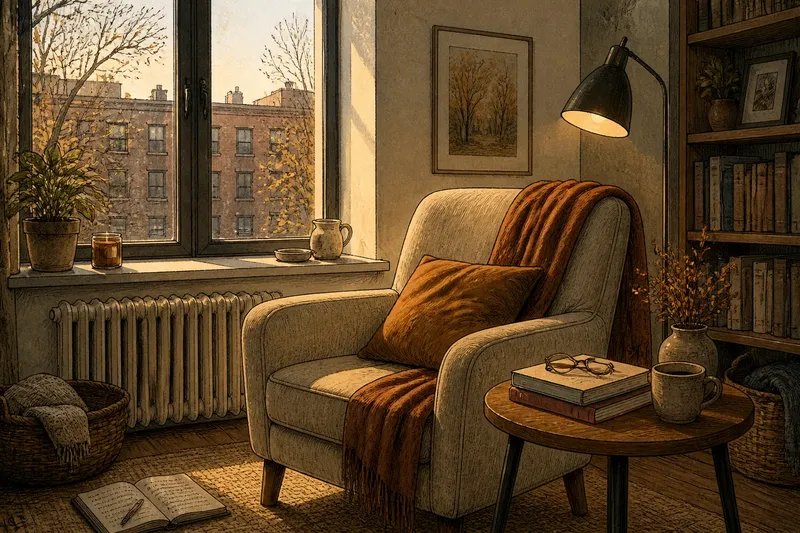
At three in the afternoon, a pale stripe of sun reaches the armchair beside Mira’s living-room window, then slips behind the neighboring building. Her late-autumn reading nook needs to work in that brief daylight and remain comfortable after it fades. The useful starting point is not a new chair or a decorative scheme; it is noticing how light moves through the room.
Mira is an invented example, but her small rental living room offers a familiar set of constraints: one window, a radiator beneath it, a floor lamp in the opposite corner, and a chair that can be moved without rearranging the room. By observing those conditions, she can choose a reading spot and reading material that suit the season instead of fighting it.
Late-autumn reading nook design starts with an ordinary afternoon
For a few days, Mira notices the window from her chair rather than trying to remember it later. She checks whether the daylight arrives directly or is softened by clouds, trees, or nearby buildings. She also notices where glare lands on a page and when the window area starts to feel cold. These observations are more useful than assuming that a window seat is automatically the brightest or most comfortable choice.
She keeps the notes simple: “bright patch on the chair,” “light on the book, not my eyes,” or “room dims before dinner.” The aim is to identify a dependable reading window, not to map every change in the weather. A room’s light can vary with clouds and the position of the sun, so a spot that works on a clear afternoon may need a lamp on an overcast one.
The radiator matters, too. Sitting directly over it might feel pleasant at first, but heat can make a reading session uncomfortable, while blocking airflow with a cushion or blanket is unhelpful. Mira keeps the chair clear of the radiator and treats the nearby window as a source of both light and possible drafts.
Choose a seat for the light you actually have
Mira first tries the chair where it already stands, angled toward the window rather than directly facing it. That orientation brings daylight across the page without putting the brightest part of the view straight behind the book. If the light reflects on glossy paper, a small turn of the chair can change the angle without changing the room.
She then considers the opposite corner, where the floor lamp already stands. It receives less daylight, but it is farther from the window’s chill and has a stable evening light source. Neither place is the universal answer: the window-side chair suits a short afternoon reading spell, while the lamp-side corner may be better for a longer session that runs into dusk.
To compare them, she carries one book and sits in each place for a few minutes at the time she is most likely to read. She notices whether she leans toward the page, squints, or shifts away from a draft. Those small adjustments reveal more than the view from across the room. The better seat is the one that lets her read without repeatedly correcting her position.
A seat does not need to be a dedicated reading chair. A sturdy dining chair with a firm cushion may work if it supports a relaxed posture; a deep sofa may feel inviting but leave the book too far from the light. Mira chooses the existing armchair and turns it slightly toward the window. A small side table holds her book and reading glasses, while a folded throw stays within reach rather than covering the radiator.
Pair the fading daylight with a simple lamp
When the sunlight leaves the chair, Mira switches to the floor lamp. She checks that its light reaches the page without shining into her eyes or reflecting sharply from the paper. A shade that directs light downward can help, while a movable reading lamp makes it easier to adjust the beam. The goal is comfortable, even visibility, not a dramatic pool of light surrounded by a dark room.
If the lamp’s bulb can be changed, Mira looks at the packaging and fixture guidance before choosing one. A warm-toned bulb may feel at home in a living room, but comfort depends on the shade, placement, page, and reader. She avoids relying on a phone flashlight as a regular substitute: it is awkward to hold and can create uneven glare.
She also checks the path between the chair and the rest of the room. A lamp cord should not cross a walking route, and the chair should not obstruct a doorway. The setup remains modest: one familiar lamp, a clear table, and a seat that can face either the window or the room as the light changes.
Choose reading material that suits a shorter afternoon
Late-autumn light can make a long, dense book feel less inviting if Mira has only a short bright interval. She places a collection of essays and a novel with clear print on the side table. Either can be read in a small stretch, and neither requires her to keep track of a complicated place when she stops to make dinner.
On a dim afternoon, she picks the book with the clearest type and matte pages, which are less likely to reflect the lamp. A large-print edition, an e-reader with adjustable brightness, or an audiobook can also suit someone whose eyes tire in low light. These are options rather than rules: the right choice depends on what feels comfortable and enjoyable to the reader.
Say you have a chair beside a north-facing window and a lamp near the bookcase. You notice that the window gives steady but subdued light, while the lamp makes glossy pages reflect. You move the chair toward the lamp, angle the shade toward the page, and choose a paperback with matte paper for the afternoon. The expected observable result is a readable page without a bright reflection, with the window still providing a quiet view rather than serving as the main light source.
There is little value in buying several lamps, seasonal cushions, or a special chair before noticing the room’s existing light. Mira’s corner improves through small changes: a different chair angle, a lamp she already owns, and books she can comfortably read in short sessions. The ritual can stay simple enough to repeat on an ordinary weekday.
What should you adjust as the light changes?
Should the chair face the window?
Not necessarily. An angled position can bring light onto the page while reducing glare and keeping the window out of the reader’s direct line of sight. Try the chair at the time you expect to use it and adjust its direction before moving other furniture.
Is a window seat best for late-autumn reading?
Only if it feels comfortable and the light reaches the book without an unpleasant draft or strong reflection. A nearby chair with a lamp may be a better fit when the window area feels chilly or the daylight is weak.
What kind of book works well in fading light?
Clear print and pages that do not reflect much light can make reading easier, but personal preference matters. If print is uncomfortable even with suitable room lighting, consider another format or ask an eye-care professional for guidance.
When should the lamp replace daylight?
Switch it on when you start leaning toward the page, squinting, or losing the clear view of the print. Waiting until the room is very dim can make it harder to settle into a comfortable reading position.
Let the corner respond to the season
After watching the room for several afternoons, Mira settles on the armchair angled toward the window and the floor lamp for the dimmer part of the day. A side table keeps her books close, and the throw rests on the chair arm until she wants it. The result is not a permanent installation; she can turn the chair toward the lamp on a gray day or shift it closer to the window when the afternoon is bright.
That flexibility is the lasting lesson of a late-autumn reading nook built around light. Start with the daylight that reaches your room, then let comfort, the lamp, and the kind of reading you enjoy shape the arrangement. A corner that responds to the actual afternoon is more inviting than one arranged for a picture-perfect view.