Silk, Cotton or Linen: Reading the Feel of a Scarf
Compare silk, cotton and linen scarves by surface, drape and daily feel so you can choose a texture that suits how you like to wear one.
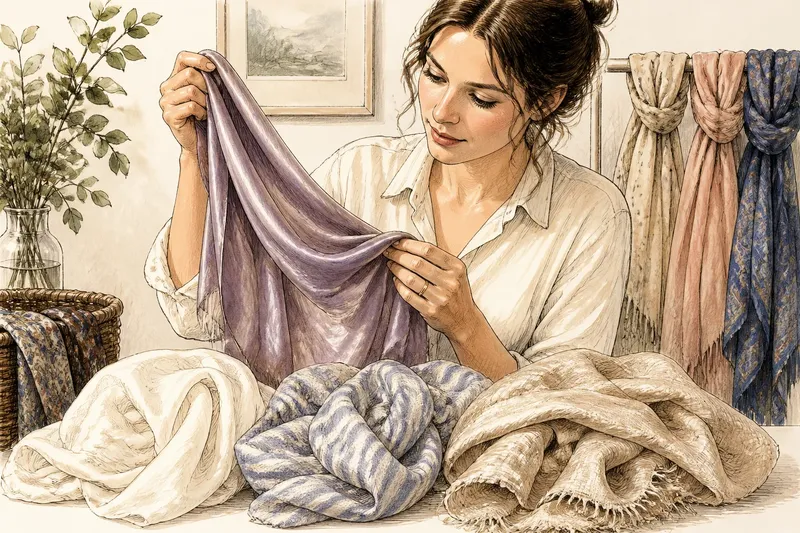
You pull a scarf from a drawer, loop it around your neck, then take it off again: the fabric feels too slippery, too stiff, or simply unlike what you expected. Choosing a silk, cotton or linen scarf by feel starts with noticing how each fibre meets the skin, falls from the hand and changes with movement.
Those qualities are tendencies, not promises. Weave, yarn thickness, finishing and the scarf’s shape can alter the character as much as the fibre does. A fine cotton voile may feel airy; a dense cotton twill can feel firm. If a scarf disappoints, the cause may be its construction or the way it is worn, not the fibre name on the label.
Silk tends to feel smooth, fluid and close to the skin
Silk often has a smooth surface and a supple drape. Hold a corner and let the fabric fall: it may form soft folds that follow the hand rather than standing away from it. The surface can catch light, but silk is not always glossy. Matte crepe, for example, has a pebbly texture, while a satin weave tends to look shinier because its longer threads reflect more light.
That fluidity can make a scarf feel graceful in a loose neck loop or tied close under a collar. It may also feel less secure in a knot, especially if the weave is slick. If a knot slides, try a wider fold or a simple overhand knot rather than pulling tighter; tension can crease delicate cloth and make the scarf uncomfortable.
Some people find silk cool and pleasant against the neck, while others notice its surface more than they want to. If you are sensitive to a slick or delicate sensation, touch the fabric to the inside of your wrist before choosing it. A silk scarf with a textured weave may feel different from a smooth satin, even when both are made from the same fibre.
Cotton offers a familiar surface and more visible structure
Cotton scarves cover a broad range of hand-feel. A light voile can be soft and airy; a gauzy weave may feel slightly crinkled; a compact twill can have a clear, firm shape. Cotton often feels less slippery than silk, so folds and knots may stay where you place them more readily. That can be useful for a scarf worn repeatedly through a day of errands or indoor transitions.
The word “soft” needs context. A scarf that feels crisp on a shop hanger may relax with handling, while a heavily textured weave may keep a dry or nubby surface. If the edge rubs your neck, turn the scarf so a softer section rests against the skin, or wear it over a shirt collar. Avoid assuming that washing will soften it: the care label and fabric finish matter.
Cotton’s more grounded feel can be appealing when you want a scarf to look casual rather than glossy or especially fluid. It may also hold a fold more clearly. A crisp cotton scarf, for instance, can make a neat triangle at the front; a thin, loosely woven one may gather into a softer bundle. The weave, not just the fibre, decides which effect you get.
Linen feels textured and tends to keep an easy, open shape
Linen usually has a more noticeable surface than smooth silk or fine cotton. Its threads may show small irregularities, and the cloth can feel dry, cool or lightly crisp in the hand. Some linen scarves soften through ordinary wear, but a relaxed feel is not automatic: yarn, weave and finishing all contribute to the result.
Compared with a fluid silk scarf, linen often falls in broader, less clingy folds. It can sit loosely over a shirt or jacket without looking carefully arranged. That relaxed shape is part of its appeal, though it may resist a tiny, precise knot. If a linen scarf feels bulky at the neck, try leaving the ends long and loose rather than wrapping them several times.
Wrinkles are part of linen’s visible character. If you like a smooth, polished surface, linen may ask for more attention than you want to give it. If you enjoy a cloth that looks lived-in without needing a perfect fold, its creases may feel natural rather than untidy. There is little point in trying to press every soft line out of a scarf whose charm depends on an informal finish.
When does the scarf feel wrong, and what should you try?
Why does silk slide out of a knot?
A smooth weave gives the knot less grip, and a narrow fold can make that effect more noticeable. Fold the scarf into a wider band or choose a looser, simpler tie; if it still shifts, wear it under a jacket lapel or use a small scarf ring designed for fabric.
Why does cotton feel stiff or scratchy?
A dense weave, crisp finish or rough edge may be responsible, rather than cotton itself. Check the whole scarf against your wrist and neck, then try a softer weave or place the edge away from skin that feels easily irritated.
Why does linen look rumpled soon after wearing?
Linen’s fibres and relaxed folds make creasing visible, especially where a scarf bends or is tucked. If that appearance bothers you, choose a finer, more compact weave or a different fibre; repeatedly smoothing the scarf may take effort without keeping it neat for long.
Why does a scarf feel too warm or bulky?
Thickness, layers and the way it is wrapped matter alongside fibre. Unfold the scarf and wear it once around the neck, or choose a lighter weave; if the bulk remains, the scarf’s size or construction may not suit that use.
Match the fibre to the kind of drape you enjoy
Think about the shape you want before deciding which fibre sounds best. For a scarf that follows the neck and gathers into fluid folds, begin with silk. For a more defined fold and a familiar, less slippery surface, consider cotton. For an open, relaxed shape with visible texture, look at linen.
Imagine you want a scarf to sit under a coat collar without a bulky knot. A fine cotton voile might be a comfortable starting point because its light weave can fold into a slim band and its surface is less slick than satin. If you prefer a soft cascade over a blouse, a fluid silk could suit better; if you want the scarf to rest loosely over a knit, a light linen may give the relaxed outline you enjoy. These are possibilities to check in person, not fixed results.
Also notice how the scarf behaves when you lift and lower your hand. Does it fall into a soft curve, keep a crisp crease, or form broad folds? That simple movement reveals more about drape than a fibre label alone. A scarf that feels pleasant in your palm but awkward around your neck may be too wide, too thick or simply shaped for a different way of wearing it.
Read the label and the fabric construction together
Fibre tells you what the yarn is made from; weave describes how the yarns cross. A plain weave can feel different from satin, twill or gauze, even when all use silk, cotton or linen. Finishing may add softness, crispness or sheen. Look closely at the surface and edges, then handle a corner and fold it once before deciding.
When the label lists a blend, expect the fibres to share the fabric’s character rather than behave as separate layers. A cotton-linen blend may retain a visible texture while feeling less crisp than some pure linen scarves. A silk blend may keep some fluidity but feel less slick. The proportions and construction vary, so use the hand-feel as the practical guide.
For care, follow the garment label and the maker’s instructions. Silk, cotton and linen can each be finished or blended in ways that change what cleaning is appropriate. If the instructions are missing or unclear, ask a reputable cleaner rather than guessing with delicate fabric.
Choose by the sensation you want to repeat
The best scarf is not the one with the most impressive fibre name; it is the one whose surface and movement you enjoy wearing. Silk tends toward smoothness and fluid folds, cotton offers varied structure and a less slippery hand, and linen brings texture and an easy, open drape. Construction can shift every one of those tendencies.
When shopping, name the sensation you want before you reach for a colour: smooth, softly structured or textured. Then check the actual fabric at the neck and in a loose fold. For a silk, cotton or linen scarf, that small pause helps you choose for the feel you will notice throughout the day, not just the look on the hanger.