Before the Hobby Box: A Short History of the Keepsake Album
The history of the keepsake album traces how people arranged letters, prints, and small tokens to preserve memories and make their meaning easier to revisit.
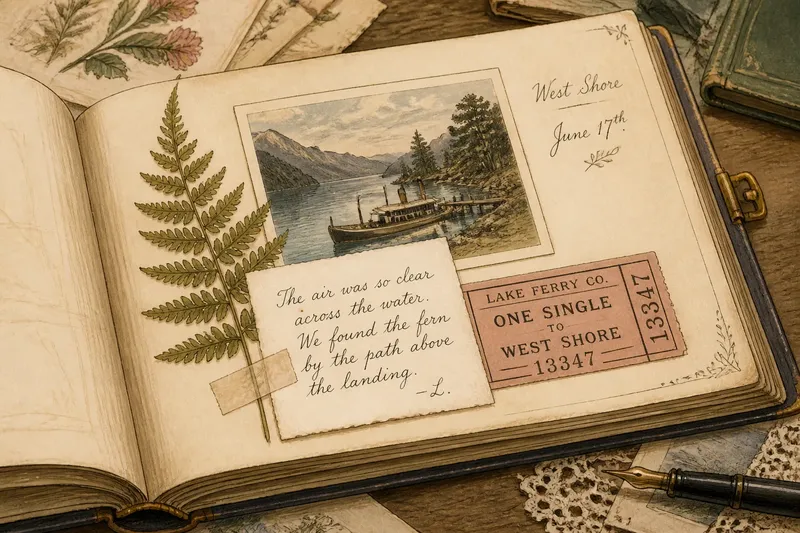
A handwritten note tucked beside a pressed leaf can turn two small objects into a memory with a shape. The history of the keepsake album is not one straight line from an ancient custom to modern scrapbooking; it is a record of people arranging images, writing, and souvenirs for private reflection or shared viewing.
Early albums gathered words and images on pages
Albums have taken different forms across periods and places, so it is more accurate to describe a family of practices than a single origin story. Some bound volumes collected inscriptions from friends; others assembled prints, drawings, or written passages. The term “album” has also been used for books intended to receive entries or images.
What these objects share is a page that gives separate items a relationship. A portrait beside a poem might suggest an attachment; a ticket beside a dated note could connect a place to a particular visit. The owner’s selection and order helped shape what a viewer made of each item.
A loose token asks whoever finds it to supply the story. Placed on a page beside a caption or another keepsake, it sits within a frame chosen by its maker. The arrangement does not recover the whole past, but it shows what the owner thought belonged together.
Printed keepsakes offered more material to arrange
Printed pictures, greeting cards, and other paper souvenirs gave album makers additional kinds of material to combine. The extent and timing of access varied by place, period, and household, so there was no single moment when albums became broadly available. A useful distinction is between an image made for a particular person and a printed image that could circulate among many people.
When a printed picture appeared beside a personal note, the two could change how each was read. The picture gained an individual setting; the note gained a visual neighbor. Album makers could organize these pairings around a journey, a season, a friendship, or simply the look of the page.
Imagine Mara, an invented album keeper, returning from a day trip with a ferry ticket, a friend’s note, and a small landscape print. She places the ticket and note beside the print, then writes the place name in the margin. The resulting page connects the image to the trip and the friend, while the caption supplies a detail that the objects alone may not make clear.
Album pages reflected choices about audience and privacy
An album could be kept in a drawer, shown to a visitor, or passed among friends. Its intended audience influenced what its owner included and how much explanation a page needed. A volume made for private reflection could leave associations unexplained; one shared with others might include names, dates, or messages.
Display required selection. Owners chose which scraps to mount and which to leave elsewhere. A carefully ordered page could present a coherent impression even if its items came from separate occasions. In that sense, an album could act as a self-portrait without containing a literal likeness.
Paper color, handwriting, borders, and captions all affected the page’s tone. These are features of the object, not evidence that every album followed the same visual style. A dark background might make light writing stand out, while a handwritten note could make a printed picture feel tied to a particular person or exchange.
What did keepsake album makers choose to preserve?
Why place a note beside an image?
Putting the items together invites a viewer to read them in relation. A note can identify a person or occasion that an image cannot explain on its own.
Did an album need to tell a complete story?
No. Pages could hold fragments, gaps, or loose associations rather than a continuous account. That open form lets a viewer see the owner’s selection without mistaking it for a complete record.
Who was meant to see the pages?
Some albums were kept for their owners, while others were shared with friends or visitors. Audience shaped the amount of context, the kinds of items included, and the tone of the presentation.
Later scrapbooks continued an older practice of arrangement
As photographs, travel mementos, greeting cards, and other printed keepsakes became part of everyday collecting in different settings, album pages adapted to hold them. A photograph could offer a likeness, while a ticket or label could identify a place or occasion. Together, such objects made a memory more particular without recording every detail.
Later scrapbooking often made decoration and personal narrative more visible, but the basic act of selecting and arranging keepsakes has older, varied precedents. The history of the keepsake album is best understood as changing ways to collect, compose, and share—not as a simple progression toward one modern hobby.
For a keepsake album today, a brief caption naming a place, person, or occasion can help a future viewer understand why two items sit together. Elaborate decoration is not worth the effort if it crowds out the objects or the words that give them meaning. A page can remain unfinished and still make its maker’s choices legible.
An album preserves a selection, not an entire life. When you look at one, notice both what the maker placed together and what the page leaves unexplained; that distinction offers a useful clue to how the collection was meant to be read.